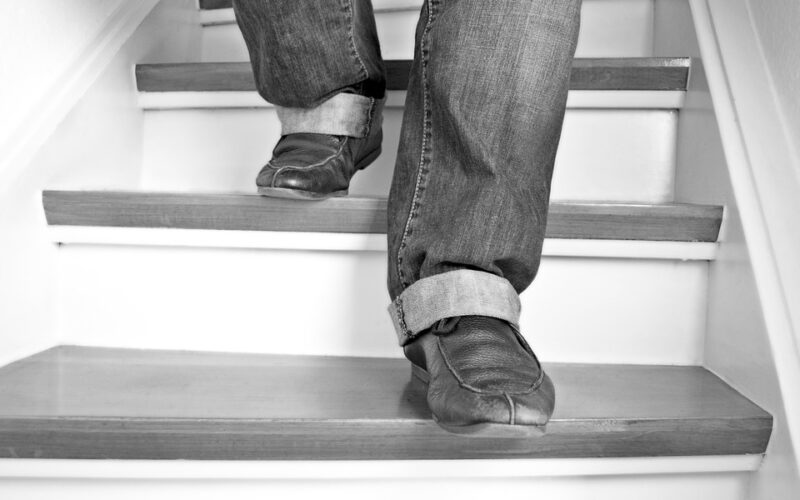
Imagine two people setting out to improve their health in the same cold week of January, one announcing a total transformation of new diet, five gym sessions a week, cold showers and a daily journal, the other simply deciding to take a twenty-minute walk after dinner and changing nothing else. By spring, the ambitious scheme has usually collapsed under its own weight, as most grand plans do, while by the end of the year the quiet walker has covered well over a hundred hours on foot, sleeps better, has dropped a clothes size and, without ever summoning heroic willpower, has genuinely become a person who walks. The difference between the two is not discipline but arithmetic.
The mathematics of modest
Money managers call it compound interest, the way small deposits left to accumulate grow into surprisingly large sums, and your health runs on much the same principle. A daily walk that burns a modest hundred and fifty calories can seem minor against a gym class, yet across a year it adds up to a considerable amount of activity, achieved without any strain on the joints. One fizzy drink swapped for water spares the body several kilograms of sugar over a year, and ten minutes' earlier bedtime becomes around sixty extra hours of sleep. No single day's choice matters very much on its own, which is precisely why it is so easy to dismiss, and precisely why the people who keep making it end up somewhere quite different from those who do not. Big results rarely come from big decisions; far more often, they come from small ones repeated until they become second nature.
Why one beats everything at once
The all-at-once approach fails for a well-documented reason: willpower behaves like a battery, and a life overhauled in every direction drains it by Wednesday. One change asks almost nothing, which means it survives busy weeks, bad moods and birthdays — the exact conditions that kill ambitious regimes. There is a subtler force at work too. Psychologists find that lasting change follows identity, not effort: the person who walks every evening soon stops seeing it as a health measure and starts seeing it as simply what they do, the way brushing teeth requires no motivational speech. And success is contagious within a life. The evening walker starts sleeping better, the better sleep steadies appetite, and the second healthy choice arrives with half the effort of the first — not because anyone forced it, but because the ground had shifted.
Choosing your one thing well
The best first choice is embarrassingly achievable, repeatable daily, and attached to something that already happens. A walk after dinner anchors itself to a meal that occurs regardless; a glass of water before each coffee, a piece of fruit with lunch, vegetables added to the plate rather than treats banished from it — each rides on existing routine instead of demanding new scaffolding. Walking deserves its reputation as the ideal candidate: it needs no equipment beyond decent shoes, no membership, no recovery days, and it welcomes any fitness level while quietly improving heart, mood, joints and sleep. But the honest rule is that the right choice is the one you will still be making in November. Choose something so small it feels like cheating. It isn't cheating; it is engineering.
Protecting the streak without worshipping it
Once your chosen habit is up and running, two simple practices keep it alive. The first is the never-twice rule: missing a day is human and harmless, while missing two starts writing a new, worse habit, so the day after a lapse is the one that matters most. The second is patience with expansion — let the first choice become automatic, a matter of weeks rather than days, before adding a second, and let each addition be as small as the first. Resist the temptation, on a good week, to suddenly triple everything; that is the all-or-nothing mindset sneaking back in through the side door. A simple record — a calendar cross, a note on the fridge — supplies the quiet satisfaction that keeps the chain growing without turning health into accountancy.
No healthy life ever truly began with throwing away every pleasure and personality trait a person had, since that version exists mainly in advertising and abandoned resolutions. Real change looks far more like that quiet second person: one unremarkable decision, made again today, compounding steadily and out of sight. A year from now you will have made hundreds of small deposits of some kind, and the only real question is what they will be. By choosing the walk, the water or the earlier night and simply repeating it, you allow those modest daily choices to add up to something genuinely worth having.